
Stormwater
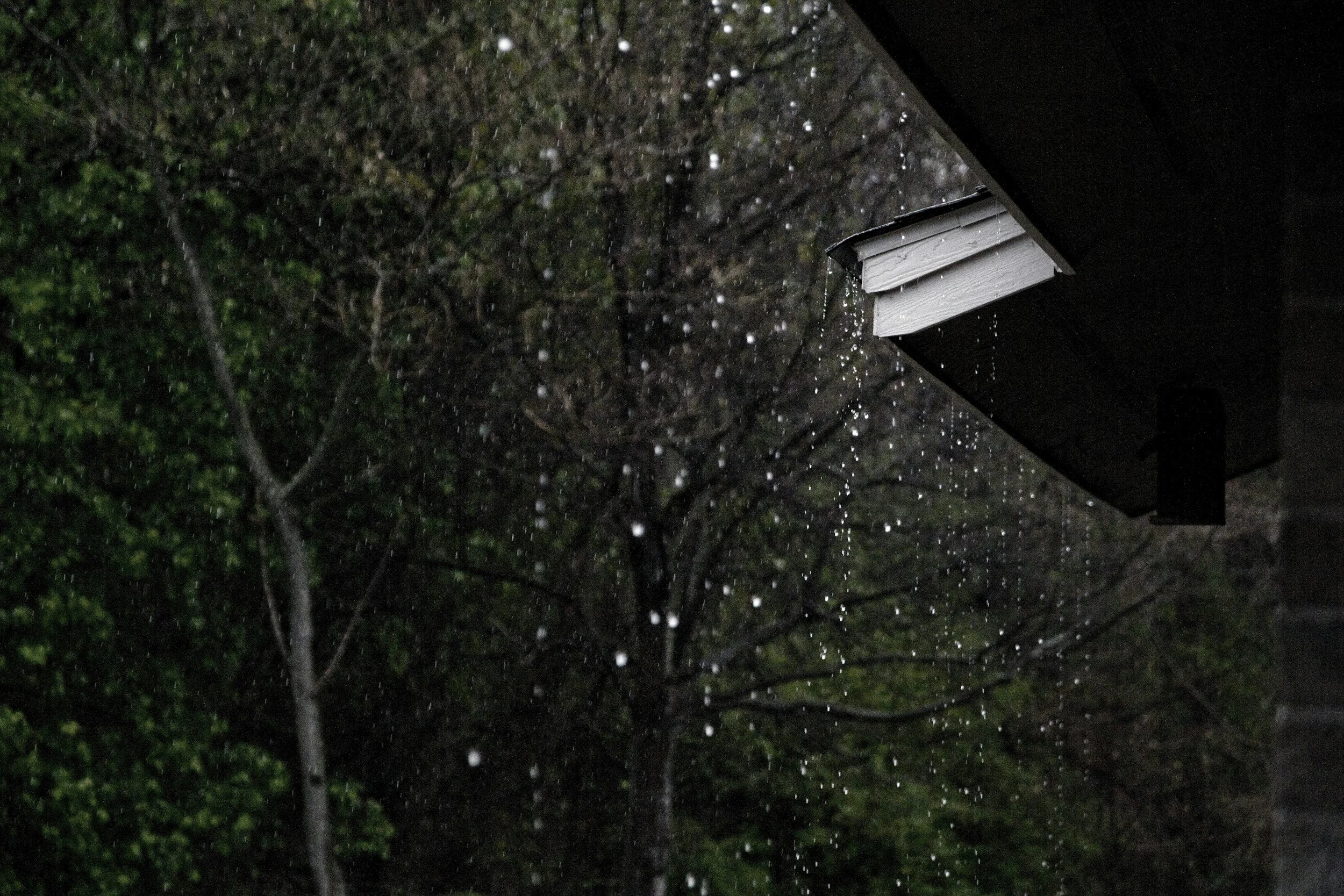
Stormwater refers to water from rain draining into the stormwater system from roofs, roads, footpaths and other surfaces. By covering water absorbent soil with hard surfaces (houses, roads, footpaths), we’ve increased the amount of stormwater entering our bushland and streams. This has contributed to what is known as ‘urban stream syndrome’.
Urbanisation is altering our waterways, causing channel deepening, widening and instability. Excess storm water from increasingly severe wet weather events has also caused landslides and damage to roads and other infrastructure and contributed to the Blue Mountains being declared a natural disaster area five times in five years.
Increasing the number of water tanks in the catchment to reduce the stormwater runoff could help reduce flooding and the urban stream syndrome. Visit our page on Landscaping to find other ways to manage stormwater runoff.
Stormwater for Firefighting
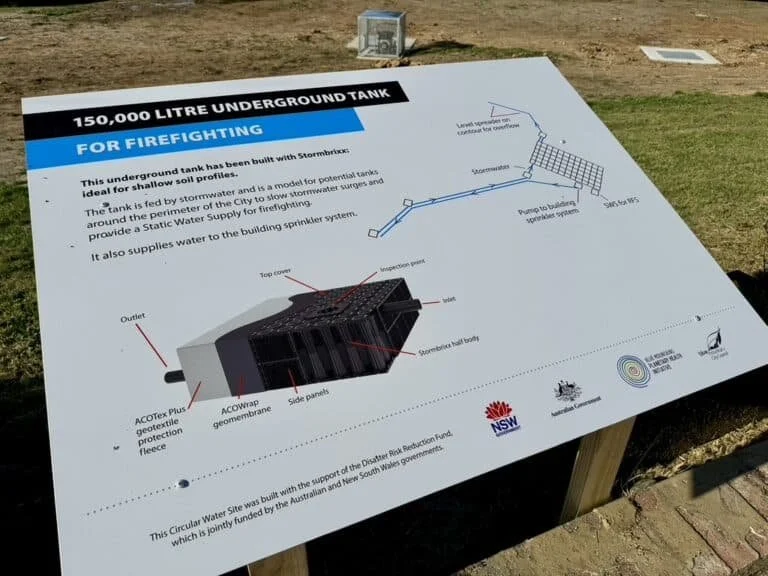
At the Planetary Health Centre we’re diverting stormwater into a 150,000 litre underground water tank to reduce its impact on the site while also creating a static water supply for firefighting.
The water is being cleaned by passing through OceanGuard Pit Baskets and is then pumped from the tank to a building bushfire sprinkler system.
The overflow is spread across contours to help ‘slow, spread and sink’ water at the top of the Planetary Health Precinct where it will then filter down to the swamp below.
Stormwater Impact on Biodiversity
The Plight of a Rare Blue Mountains Fish
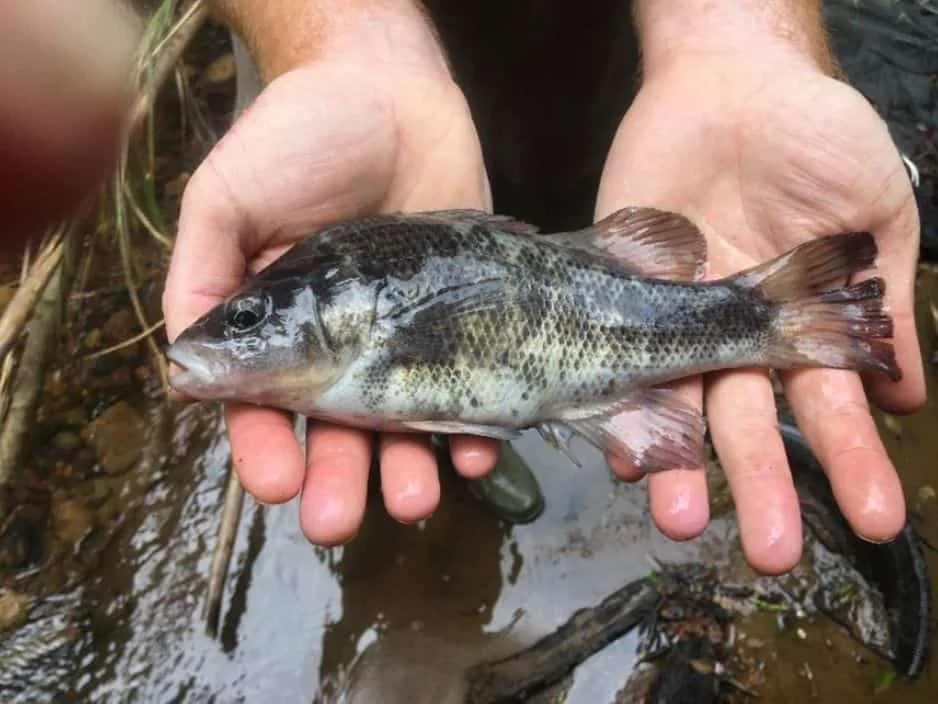
Blue Mountains Perch have a “clever strategy” to keep their eggs safe, laying them at the top of a fast-flowing stream. As the eggs bounce along in the current, they get wedged amongst the rocks and pebbles which keep predators out, and the constant flow of water keeps them clean and well oxygenated.
But there is now far too much sediment in our streams from our backyards and construction sites, but also from the erosion of creeks as they get blasted with urban stormwater. Even the fast-flowing sections of streams get covered with this blanket of sand on the bottom. Without that rocky habitat, there’s no way for this fish to breed. Read the full story here >
Blue Mountains Crayfish Need Our Help
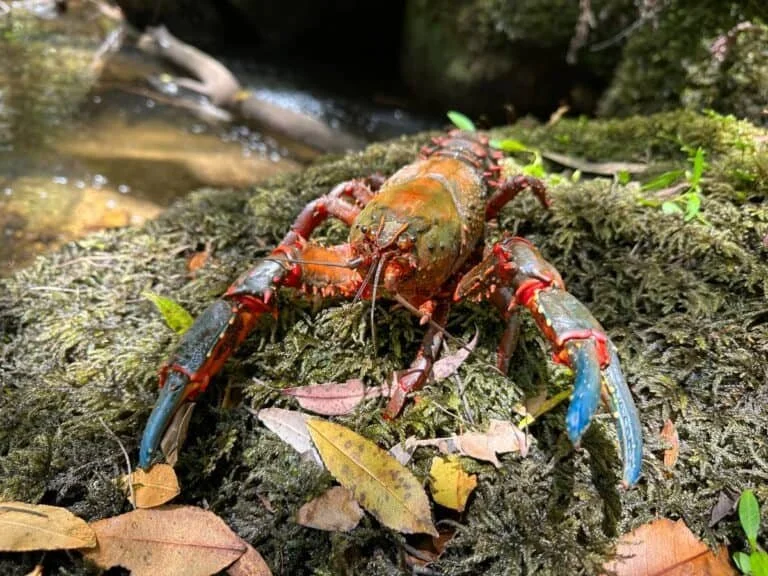
Giant Spiny Crayfish (Euastacus spinifer) and Sydney Crayfish (Euastacus australasiensis) are two iconic and long-lived Blue Mountains species that are vital to the health of whole ecosystems.
Fishing and stormwater pollution are constant key threats to crayfish, while pesticide contamination, specifically the synthetic pyrethroid bifenthrin, has caused mass kill events in at least two local creeks. Read the full story here >

Restoration at the Top of the Catchment
“Working at the top of the catchment we can control a lot of the detrimental impacts from going down.” Runoff from the highway and sand from development are key challenges.
With this water and runoff from homes comes weeds, their seeds and higher levels of nutrients including phosphorus and nitrogen. These come from various sources including fertilisers and faeces which also bring harmful pathogens and bacteria. Read the full story here >
Saving the Dwarf Mountain Pine
Watch Blue Mountains City Council’s Healthy Waterways environmental cadet Will Goodwin explain how stormwater from our built environment is damaging our bushland and, in particular, the endangered Dwarf Mountain Pine.
How to Stop Stormwater Pollution
Here are suggestions from the NSW Government Department of Environment and Heritage on how you can prevent stormwater pollution and help keep our waterways healthy.
In the garden
wash your car on grass or gravel or take it to a car wash
reduce use of pesticides, herbicides and fertilisers
stop dirt, leaves, grass clipping, etc. from entering gutter and drains – sweep hard paths and driveways regularly and put sweepings on the garden, in the compost or bin
stop soil and mulch from being washed or blown off the garden
replant areas of disturbed soil
use natural alternatives to pest control chemicals.
In the street
stop leaves, litter and sediments from entering gutters and drains – sweep gutters and driveways regularly and put sweepings on the garden, in the compost or bin
pick up litter and put it in a bin – bin your cigarette butts
pick up pet droppings and dispose of them in a rubbish bin, the garden or toilet
limit use of detergent when cleaning outside
wash your car on grass or gravel or take it to a car wash
maintain your car – make sure fuel is burnt ‘cleanly’ and there are no fuel or oil leaks by keeping your car tuned
work on your car in the garage, not on the street or where oil and grease may wash into gutters.
During renovations
wash paint brushes and rollers over a sand filter on the lawn
take paint, turps and solvents to your local recycling centre or chemical clean out
reuse turps once paint has settled
remove sand, gravel, cement and other building materials with a shovel and a bin or skip
cover your load – soil, sand or other waste – when taking it to the tip.
On the land
stabilise banks of river, creeks and streams by planting vegetation
control soil erosion by replanting areas of disturbed soil
set up barriers to prevent sediment from building sites washing into stormwater drains
reduce agricultural nutrient run-off – reduce use of pesticides, herbicides and fertilisers
rehabilitate wetlands.
In the catchment
set up pollution traps or filters to catch land-based pollution before it enters waterways
clean or empty pollution traps regularly
create artificial wetlands, a type of pollution trap, at the discharge point of a catchment
reduce run-off from unsealed roads by conducting routine maintenance
treat stormwater at the source of the pollutant – harvest rainwater or use bio-filtration systems
retrofit stormwater treatment systems in developed areas.